
Kenilworth Architecture And Lifestyle: A Buyer’s Guide
Looking for a place where architecture is not just a backdrop, but part of daily life? Kenilworth offers exactly that. If you are drawn to historic homes, orderly streetscapes, lak
Looking for a place where architecture is not just a backdrop, but part of daily life? Kenilworth offers exactly that. If you are drawn to historic homes, orderly streetscapes, lake access, and a village feel that stays consistent from block to block, this guide will help you understand what makes Kenilworth distinct and what to watch for as a buyer. Let’s dive in.
Why Kenilworth Feels So Distinct
Kenilworth was founded in 1889 when Joseph Sears purchased 223.6 acres between the railroad and Lake Michigan and planned the village as a designed suburban community. According to the Village of Kenilworth, it is the only North Shore lakefront community developed as a planned community. That early vision still shapes how the village looks and feels today.
From the beginning, the plan emphasized large lots, sunlight, underground utilities, no alleys or fences, and high construction standards. Kenilworth’s land area later settled at just 0.6 square miles, which helps explain its compact, intimate character. When you drive or walk through the village, that careful planning often feels visible in the spacing, scale, and rhythm of the homes.
The village’s comprehensive plan also reinforces that continuity. It aims to protect and enhance the character of single-family neighborhoods while allowing appropriate infill, and it notes that lot sizes and building heights are fairly consistent within neighborhoods. For buyers, that usually means the streetscape feels cohesive rather than pieced together over time.
Kenilworth Home Styles You’ll See
One of Kenilworth’s biggest draws is the range of historic architecture packed into a small footprint. The Kenilworth Historical Society documents nearly 300 surviving homes built from 1889 to 1925, with styles that include Queen Anne, Prairie School, Arts and Crafts, Colonial Revival, Tudor Revival, Dutch Colonial Revival, Classical Revival, and other European-derived influences.
The village’s own planning documents describe a similar mix. Earlier homes include Queen Anne, Richardsonian Romanesque, Shingle, Classical Revival, and Colonial Revival examples. By the early 20th century, Arts and Crafts, Four Square, and Prairie influences became more common.
If you are touring homes and want a quick visual guide, these are some of the easiest styles to spot.
Prairie School Homes
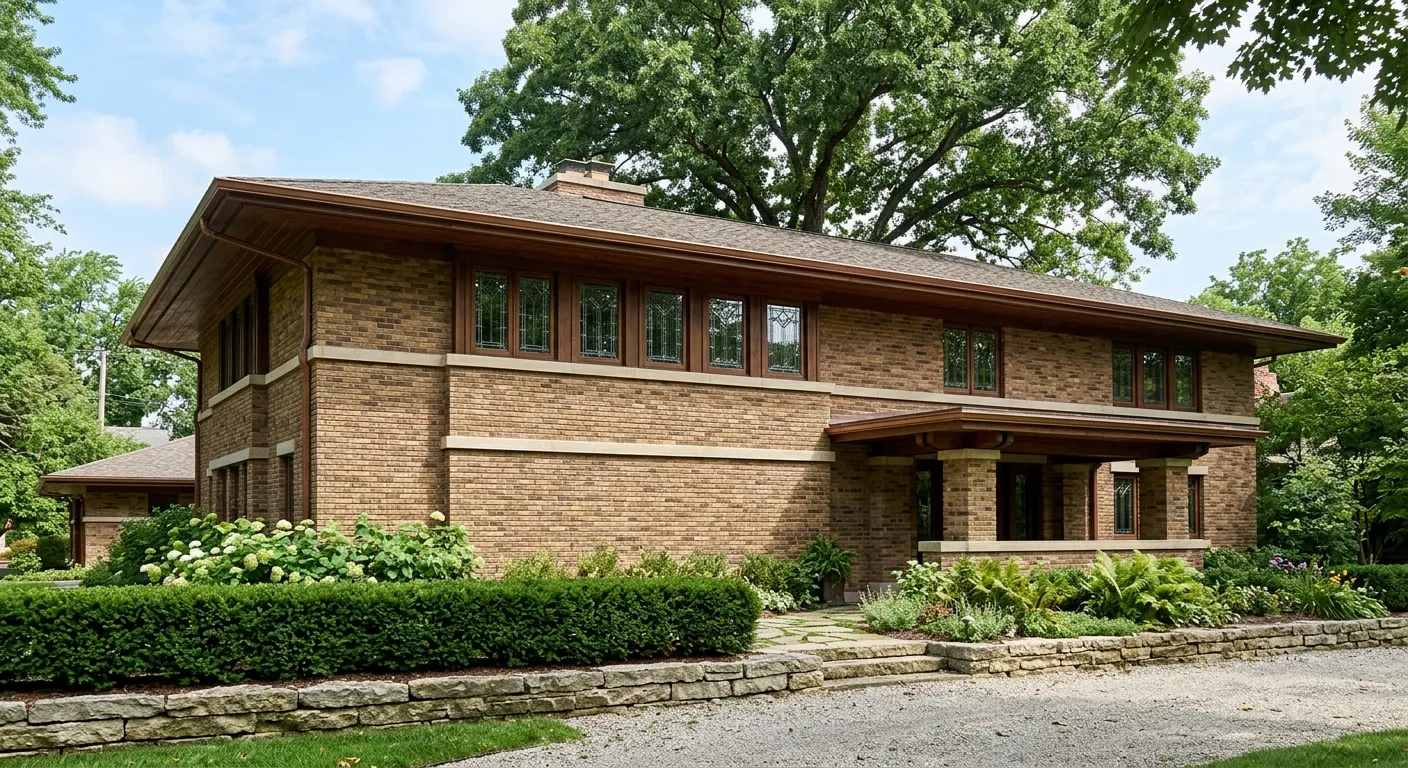
Prairie School homes often have strong horizontal lines, low-pitched hipped roofs, broad eaves, and grouped windows. These homes can feel grounded and expansive, even on a modest footprint. In Kenilworth, they often contribute to the village’s calm and ordered streetscape.
Arts and Crafts Homes
Arts and Crafts homes tend to feature simpler forms and natural materials. They often feel practical, warm, and closely tied to craftsmanship. If you like homes with architectural character that still feel approachable, this style may stand out to you.
Queen Anne Homes
Queen Anne homes are usually easier to spot because they are more ornate and asymmetrical. You may notice towers, turrets, varied rooflines, and decorative details. These homes often bring a more expressive look to the street while still fitting into Kenilworth’s historic fabric.
Colonial Revival Homes
Colonial Revival homes often read as more formal and symmetrical. In Kenilworth, many are brick-clad, which can give them a more stately appearance. Buyers who prefer classic, balanced design often respond well to this style.
Tudor Revival Homes
Tudor Revival and other English-derived styles became especially common in later neighborhoods and during the 1920s build-out. These homes often add another layer of character to the village. In some areas, they can feel slightly different from the earliest sections while still fitting the overall context.
Architect-Designed Highlights Matter Here
Kenilworth’s architectural reputation is not just about style categories. It is also reinforced by notable architect-designed buildings and homes throughout the village. The Kenilworth Historical Society notes that 205 Essex Road is the village’s only residence designed by Frank Lloyd Wright.
George W. Maher also left a major mark on the community. His work includes the Kenilworth Assembly Hall, early schools, the fountain, and his own home. For buyers who care about design pedigree, that history adds depth to the buying experience and helps explain why architecture is such a visible part of village identity.
The Historical Society also coordinates architectural tours and exhibits. If you are trying to sharpen your eye before making an offer, learning the local style vocabulary can be useful when comparing homes that may look similar at first glance.
Original Sections Versus Later Areas
Not every part of Kenilworth developed in the same phase, and that can shape what you see on tour. The original settlement tends to reflect the village’s earliest planning ideals and older architectural mix. Later sections often carry those same ideas forward, but with subtle differences in lot size, materials, and house scale.
A good example is the Kenilworth Beach neighborhood, which the comprehensive plan says was subdivided in 1922 into 63 residential lots. It was built to continue the original village character, but with smaller lots, similar setback covenants, and a majority of masonry homes. For a buyer, that means a later home may feel a bit more compact or more brick-focused than one in the earliest part of the village.
What Renovations and Newer Construction Need to Respect
Kenilworth is highly protective of its built environment, and that matters if you are buying a home with updates or considering future changes. The Village’s Building Review Commission reviews demolition applications for historical or architectural significance. It can delay a demolition permit for up to a year while alternatives are studied.
The village’s construction rules also direct builders to be sensitive to the residential character of the community and to keep debris, dust, noise, and work contained to the site. That tells you something important as a buyer. In Kenilworth, preserving neighborhood character is not just a preference. It is part of how the village manages change.
For business and institutional buildings, the Architectural Review Commission handles appearance review. The business district guidelines call for compatible interpretations of historic English styles rather than literal copies, and the broader comprehensive plan emphasizes preserving neighborhood character, design quality, and the rhythm of open space.
What To Look For During A Tour
When you walk through a home, pay attention to how renovations relate to the original structure. A thoughtful addition often respects the original roofline, window rhythm, setbacks, and lot proportions. In Kenilworth, those details matter because they align with the village’s long-standing planning priorities.
It is also worth asking whether the home feels integrated into the streetscape. Even if finishes are updated, the best renovations usually preserve the visual balance that makes the village feel so consistent. That is often a better long-term fit than aggressive reinvention.
Everyday Lifestyle In Kenilworth
Architecture may bring you to Kenilworth, but daily life is what determines whether it feels like home. The village offers a compact, highly residential setting with civic spaces, lake access, parks, and a practical commuter setup. For many buyers, that combination is a big part of the appeal.
School Path And Daily Routine
Kenilworth School District 38 serves local students through The Joseph Sears School, a JK-8 public school. The district states that residents may attend grades K-8 tuition-free if residency is confirmed. For grades 9-12, Kenilworth is served by New Trier Township High School District 203, with freshmen attending Northfield and grades 10-12 attending Winnetka.
Parks And Green Space
The Kenilworth Park District manages a small but active park system. Its park list includes Mahoney Park, Centennial Park, Maggi Park, Charles Ware Memorial Garden, Townley Field, Pee-Wee Park, and North Park. The district also describes green-space stewardship, tree-lined streets, and landscape care as long-running parts of the village’s identity.
That emphasis on landscape matters because it shapes everyday experience. Even short walks or quick trips through the village tend to feel intentional and well-kept. For buyers, that can be just as important as the architecture itself.
Lakefront Access
Kenilworth Beach is one of the village’s defining lifestyle features. The Village says residents have beach access, seasonal passes are required, and the beach is staffed when open. The village is also advancing beach-improvement work.
If lake access is part of your home search, this is more than a scenic bonus. In Kenilworth, the shoreline is part of active civic life and everyday recreation.
Community Spaces
The Kenilworth Assembly Hall plays an important role in village life. The Park District describes it as the community center and notes that it is a historic 1907 building. It hosts public meetings and many events, helping reinforce the village’s small-scale, face-to-face atmosphere.
Commuting And Everyday Convenience
For a small village, Kenilworth has a practical commuter setup. Metra’s Kenilworth station is on the Union Pacific North line at 400 Richmond Road, with 100 parking spaces and permit-based commuter parking. Residents with a village sticker are permitted to park in commuter areas.
The Village’s New Resident Guide also notes that residents can obtain library cards through the Wilmette Public Library or Winnetka-Northfield Public Library at no extra cost, even though Kenilworth does not have its own physical library building. These small details can make daily logistics easier than you might expect in a compact community.
How To Evaluate Fit As A Buyer
When buyers tour Kenilworth, the first questions are often architectural. Is the home part of the original settlement or a later phase? Is the style Prairie, Colonial Revival, Tudor Revival, Arts and Crafts, or something more modern in expression?
The next set of questions is about compatibility. Do additions, garages, and materials still feel aligned with the village’s rhythm of setbacks, open space, and quality construction? A home does not have to be untouched to work well in Kenilworth, but it usually benefits from updates that respect the existing context.
Then comes lifestyle fit. Think about your daily routines, your preferred commute, your interest in beach access, and how much value you place on a compact, strongly managed residential setting. Buyers who are most drawn to Kenilworth are often the ones who want clear architectural character and appreciate a preservation-minded community.
Kenilworth is not trying to be everything at once. Its appeal comes from focus, continuity, and a strong sense of place. If that matches what you want in a home search, it can be a very compelling village to explore.
If you are weighing homes in Kenilworth and want thoughtful guidance on architecture, fit, and long-term value, Jeff Proctor can help you navigate the market with clear, local insight.
FAQs
What architectural styles are most common in Kenilworth?
- Buyers in Kenilworth are most likely to see Queen Anne, Prairie School, Arts and Crafts, Colonial Revival, Tudor Revival, Dutch Colonial Revival, Classical Revival, and other historic styles documented by the Kenilworth Historical Society and village planning materials.
What makes Kenilworth architecture feel so cohesive?
- Kenilworth was planned from the start in 1889 as a designed suburban community with large lots, sunlight, underground utilities, no alleys or fences, and high construction standards, and the village still emphasizes consistent lot sizes, building heights, and neighborhood character.
What should buyers look for in a renovated Kenilworth home?
- Buyers should look for renovations and additions that respect the original roofline, window rhythm, setbacks, and lot proportions, since those qualities align with the village’s review processes and long-term planning goals.
What is the lifestyle like in Kenilworth for residents?
- Kenilworth offers a compact residential setting with beach access, a small but active park system, community events centered around the Assembly Hall, and commuter access through the Metra station on the Union Pacific North line.
What schools serve Kenilworth residents?
- Kenilworth School District 38 serves local students through The Joseph Sears School for JK-8, and New Trier Township High School District 203 serves grades 9-12, with freshmen at Northfield and grades 10-12 at Winnetka.
Does Kenilworth have public beach access for residents?
- The Village states that residents have access to Kenilworth Beach, seasonal passes are required, and the beach is staffed when open.
Work With Us
Get assistance in determining current property value, crafting a competitive offer, writing and negotiating a contract, and much more. Contact us today.
Contact Us