Lincoln Park Chicago Real Estate Guide
Compare greystones, multi-unit homes, condos, and newer construction by property form, block-level routine, ownership costs, and the details behind each listing.
From our Chicago research
The 60614 snapshot is a postal-area starting point
The selected August ZIP study recorded 244 active listings and 29 median days on market for 60614. For a Lincoln Park home, use that only to ask which property types and current alternatives share the address's competitive set.
Realtor.com 60614 August 2026 summary. ZIP 60614 is neither the whole of nor exclusive to Lincoln Park.
Review the selected-ZIP studyLincoln Park buyers may be comparing greystones, multi-unit buildings, condos, and newer homes across a large set of blocks. Begin with the property form, complete ownership budget, parking, condition, and the routes you would actually use. Then verify the exact address, building records, and any school or association information instead of treating a neighborhood label as a substitute for property-level review.
A Short History of Lincoln Park
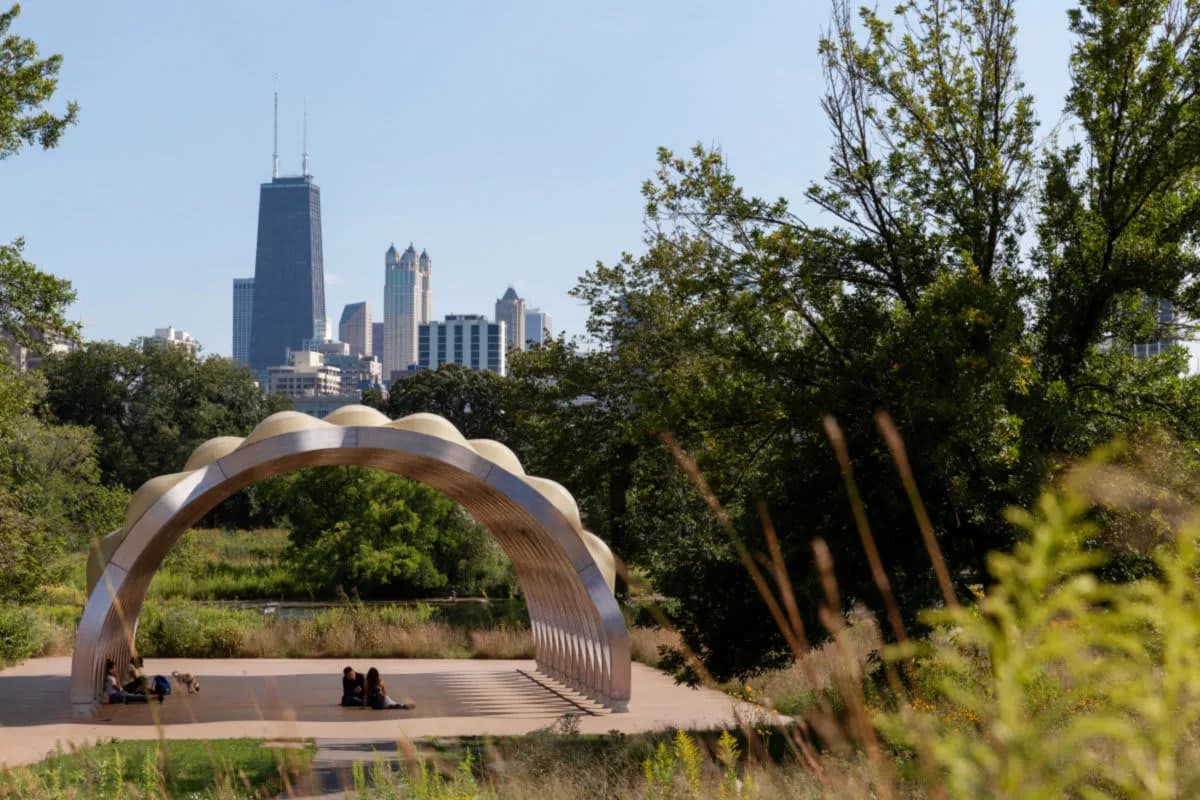
Lincoln Park takes its name and its shape from the park itself. The lakefront land was originally a municipal cemetery, and after burials were relocated in the 1860s the ground was converted to public parkland and named for Abraham Lincoln. That decision fixed the neighborhood’s eastern boundary as open space rather than development, and it remains the single largest factor in how the area is valued today.
Residential building followed the streetcar and elevated lines through the late nineteenth century, producing the dense blocks of greystones, two-flats, and Victorian row houses that still define the interior streets. Industry occupied the western edge along the Chicago River and the Clybourn corridor.
The late twentieth century brought a substantial shift as that industrial land was redeveloped for retail and housing, and DePaul University expanded its campus through the neighborhood’s center. The result is a neighborhood with distinctly different textures from east to west: parkland and historic blocks near the lake, a university core in the middle, and newer large-format development toward the river.
Continue your Lincoln Park home search
Use these Chicago buyer guides to organize the next property-specific questions.
Schools Serving Lincoln Park
Lincoln Park is served by Chicago Public Schools, and because the neighborhood is large it contains several different elementary attendance areas rather than one. Lincoln, Alcott, Prescott, Mayer, and LaSalle Language Academy all serve portions of the neighborhood, along with Newberry Math & Science Academy, Jahn, and Harriet Tubman. Most CPS elementary schools here run PK or K through 8 in a single building rather than splitting into a separate middle school.
For high school, the neighborhood feeds Lincoln Park High School, which enrolls neighborhood students alongside selective programs admitted by application. Private and parochial options include St. Clement, St. Josaphat, and Cardinal Bernardin Montessori Academy. Because attendance boundaries divide the neighborhood block by block and can be redrawn, the assigned elementary school is one of the first details to confirm with Chicago Public Schools for any specific address.
Daily Life in Lincoln Park
Daily life in Lincoln Park is organized around the park, the retail corridors, and the transit lines, and it varies noticeably depending on which part of the neighborhood you are in. The park itself carries much of the neighborhood’s recreation: Lincoln Park Zoo admits visitors free of charge, the Peggy Notebaert Nature Museum sits at its northern end, and the Lakefront Trail runs the full eastern edge. Inland, Armitage Avenue and Halsted Street form a walkable boutique and restaurant district, while the Clybourn corridor toward the river handles larger-format shopping. Oz Park and a network of smaller parks serve the interior blocks. DePaul University’s presence near Fullerton keeps that section busier and younger during the academic year, while the streets east of Clark stay quieter and more residential. Most errands are walkable within a given pocket.
The neighborhood’s size means conditions differ block to block more than in smaller Chicago neighborhoods.
Architecture and Housing Stock
Lincoln Park has one of the most varied housing inventories in Chicago. The historic core consists of greystones, brick two-flats and three-flats, and Victorian row houses built largely between 1880 and 1920. Many of these have been converted from multi-unit buildings back to single-family homes, which is one of the most common renovation patterns in the neighborhood.
Layered onto that are mid-century apartment buildings, contemporary single-family infill on former industrial parcels, and larger new-construction developments toward the Clybourn corridor. Because the neighborhood is large, the practical effect is that two listings at similar prices can differ substantially in age, lot size, and parking. Off-street parking in particular is a recurring point of comparison, since many of the oldest blocks were built before it was standard.
Getting Around and Commuting
Lincoln Park is served by three CTA rail lines. The Fullerton station carries Red, Brown, and Purple Line service, and additional Brown Line stops at Armitage, Diversey, and Wellington serve the neighborhood’s northern and western sections. Bus routes run along Clark, Halsted, Fullerton, and Ashland.
For drivers, Lake Shore Drive runs along the eastern edge and provides the fastest route to the Loop, while Ashland Avenue and Clybourn Avenue carry north–south traffic inland. The Kennedy Expressway (I-90/94) is accessible from the neighborhood’s western side.
Nearby Communities
Lincoln Park sits within the Chicago communities the JProctor Group serves. Explore neighboring areas:
Frequently Asked Questions About Lincoln Park
Where is Lincoln Park in Chicago?
Lincoln Park is on Chicago’s North Side, bordered by Lake Michigan and the park of the same name to the east and the Chicago River to the west. It sits north of the Gold Coast and south of Lakeview. CTA Red, Brown, and Purple Line trains serve the neighborhood at Fullerton.
What is Lincoln Park known for?
Lincoln Park is best known for the 1,200-acre lakefront park it is named after, which includes Lincoln Park Zoo and the Peggy Notebaert Nature Museum. The neighborhood is also known for its greystone and row-house architecture, the Armitage and Halsted retail corridor, and DePaul University.
What schools serve Lincoln Park?
Chicago Public Schools divides the neighborhood among several elementary attendance areas, including Lincoln, Alcott, Prescott, Mayer, and LaSalle Language Academy. Most run PK or K through 8 in one building. Lincoln Park High School serves grades 9 through 12. Because boundaries vary block by block, confirm the assigned school for a specific address with CPS.
Is Lincoln Park Zoo free?
Yes. Lincoln Park Zoo is free to enter and is located within the park along the neighborhood’s eastern edge. It is one of the oldest zoos in North America and operates year-round.
What kinds of homes are in Lincoln Park?
The neighborhood contains greystones, brick two-flats and three-flats, and Victorian row houses built largely between 1880 and 1920, many since converted to single-family homes. It also includes mid-century apartment buildings and contemporary infill construction, particularly toward the Clybourn corridor. Off-street parking varies significantly by block.
How long is the commute from Lincoln Park to the Loop?
CTA Red Line service from Fullerton typically reaches the Loop in roughly fifteen minutes. Drivers use Lake Shore Drive along the lakefront or the Kennedy Expressway from the neighborhood’s western edge. Numerous bus routes also run south toward downtown.

Jeff Proctor
Team Lead | Broker · License #475119674
@properties Christie's International Real Estate
Questions about buying or selling in Lincoln Park? Reach the JProctor Group at (773) 517-6026 or jeffproctor@atproperties.com. See our home selling strategy or request a home valuation.
Explore Lincoln Park With Us
Get assistance in determining current property value, crafting a competitive offer, writing and negotiating a contract, and much more. Contact us today.
Contact Us