
Research question
What does this evidence show within this research scope: Zillow city all-homes and single-family ZHVI for Chicago and five western suburbs?
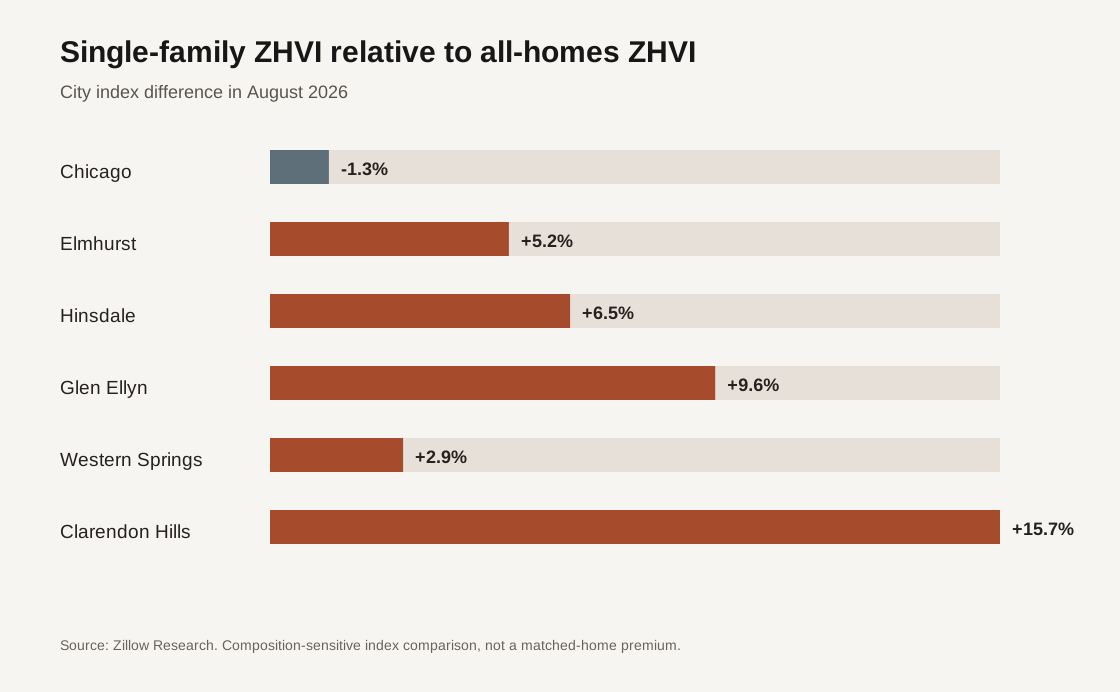
Single-family ZHVI exceeded all-homes ZHVI in five reviewed suburbs, while Chicago's single-family index was 1.3% lower. The gaps describe different modeled housing populations, not the value added by a property type.
Executive summary
- In five reviewed western suburbs, Zillow's single-family ZHVI was 2.9% to 15.7% above the all-homes ZHVI in August 2026.
- Chicago moved in the other direction: its single-family ZHVI was 1.3% below its all-homes index.
- The difference is not a matched-home premium. The two indexes represent different housing populations, and the all-homes measure can include condominiums, cooperatives, and other homes in proportions that vary by city.
The six-city comparison
| City | All-homes ZHVI | Single-family ZHVI | Dollar difference | Difference from all-homes index |
|---|---|---|---|---|
| Chicago | $334,030 | $329,793 | -$4,237 | -1.27% |
| Elmhurst | $642,280 | $675,341 | +$33,061 | +5.15% |
| Hinsdale | $1,298,279 | $1,382,287 | +$84,009 | +6.47% |
| Glen Ellyn | $578,698 | $634,226 | +$55,528 | +9.60% |
| Western Springs | $912,036 | $938,192 | +$26,157 | +2.87% |
| Clarendon Hills | $695,190 | $804,604 | +$109,414 | +15.74% |
Why Chicago can have a negative gap
The city result does not mean a single-family house is worth less than an otherwise identical condominium. The source does not create matched pairs. It estimates separate typical values for two populations.
Chicago's housing mix is large and varied. High-value attached housing can influence the all-homes index, while the single-family index covers a different distribution of locations and homes. The suburban indexes also reflect their own composition. Without property-level matching, the source cannot isolate a causal effect of being detached.
Why the largest percentage gap is not a pricing rule
Clarendon Hills had the widest observed index gap, 15.74%, and the largest dollar difference, about $109,414. That does not justify adding 15.74% to a condominium value to estimate a house, or subtracting it in reverse.
The calculation does not control for square footage, lot size, age, condition, renovation, parking, association costs, exact location, or the quantity of each property type. It is a composition check that can prevent a buyer or seller from mixing unlike benchmarks.
Use the property-type series as a filter
For a Chicago condo search, start with attached comparables in the relevant building or competitive set. For a suburban single-family search, use recent single-family transactions and current alternatives with similar physical and location characteristics.
The city indexes can frame the first question: does the broad all-homes headline describe the housing type being considered? The answer still requires property-specific evidence.
Sources, calculation, and limits
- Zillow Housing Data supplies separate city all-homes and single-family ZHVI files.
- Difference percentage = (single-family ZHVI / all-homes ZHVI - 1) x 100.
- Six exact Illinois city rows were matched on the August 31, 2026 date.
The source describes modeled typical values, not closed-sale medians. This study does not measure a same-home premium, causal property-type effect, appraisal, forecast, individual transaction outcome, or return. The last actual date in both retained files is August 31, 2026.
Questions about this research
What question does this research answer?
It examines this scope: Zillow city all-homes and single-family ZHVI for Chicago and five western suburbs. The research period is August 31, 2026. Single-family ZHVI exceeded all-homes ZHVI in five reviewed suburbs, while Chicago's single-family index was 1.3% lower. The gaps describe different modeled housing populations, not the value added by a property type.
Can this research set a price or offer for a specific property?
No. This is point-in-time research for the stated scope; a property-specific decision still requires current comparables, the property's condition, and the transaction facts that apply to the address.
Where can I review the method and limits?
The publication below identifies the source notes, reporting period, geography, and scope limits used for this analysis.