
Research question
What does this evidence show within this research scope: Zillow city all-homes ZHVI for Chicago and five western suburbs; broad city context?
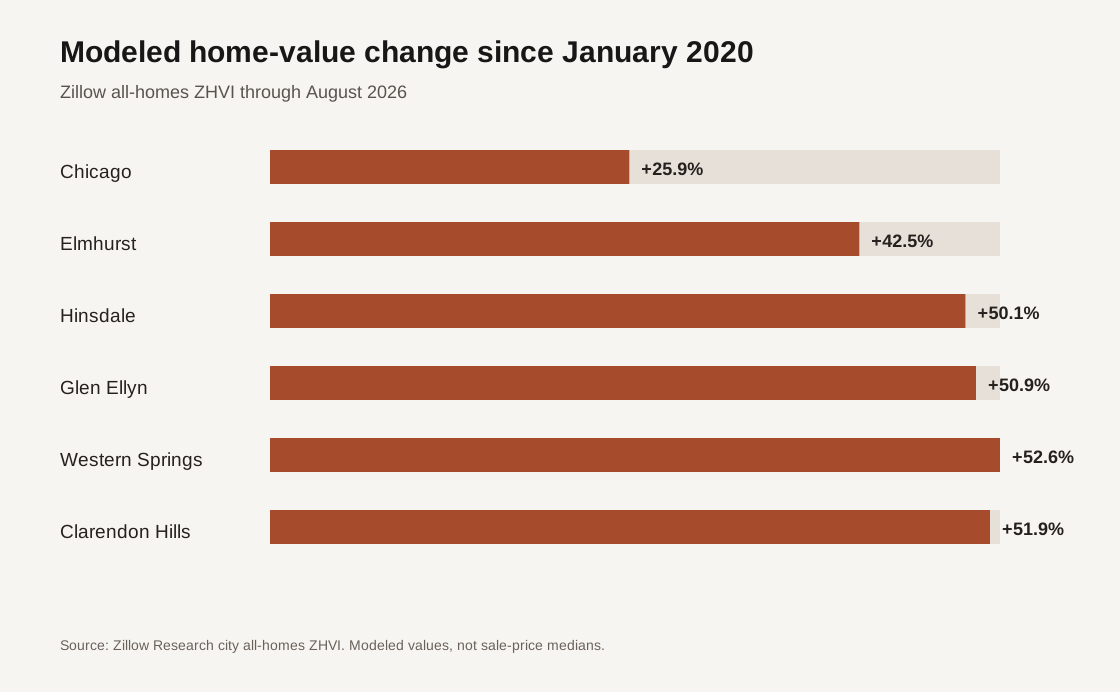
Six modeled city indexes rose from their January 2020 levels, but Chicago's 25.9% change was well below the 42.5% to 52.6% range across five reviewed western suburbs.
Executive summary
- Zillow's modeled all-homes index increased 25.9% for Chicago from January 2020 to August 2026. The five reviewed western suburbs increased between 42.5% and 52.6%.
- Western Springs recorded the largest change in this six-city comparison at 52.6%. Glen Ellyn, Clarendon Hills, and Hinsdale were each near 50%.
- The 26.7-percentage-point span between Chicago and Western Springs is a divergence in city indexes. It is not a return earned by a particular homeowner and does not explain why the paths differed.
What was measured
This study selects exact Illinois city rows from Zillow's smoothed, seasonally adjusted all-homes Home Value Index. Zillow describes ZHVI as a measure of the typical value for homes in the 35th to 65th percentile range. It is a modeled index based on a broad housing stock, not a median of homes sold in a month.
The comparison uses January 31, 2020 and August 31, 2026 observations from the same retained national file. No sale-price series, appraisal record, property-level transaction, renovation adjustment, or investment return is mixed into the calculation.
| City | January 2020 ZHVI | August 2026 ZHVI | Change |
|---|---|---|---|
| Chicago | $265,325 | $334,030 | +25.89% |
| Elmhurst | $450,856 | $642,280 | +42.46% |
| Hinsdale | $864,888 | $1,298,279 | +50.11% |
| Glen Ellyn | $383,568 | $578,698 | +50.87% |
| Western Springs | $597,670 | $912,036 | +52.60% |
| Clarendon Hills | $457,715 | $695,190 | +51.88% |
The divergence is useful, but the denominator matters
Chicago's change was 16.6 percentage points below Elmhurst and 26.7 points below Western Springs. That supports a limited conclusion: the reviewed city indexes did not move together from the same starting month.
It does not establish that a household would have earned those percentages. The index does not subtract transaction costs, taxes, insurance, maintenance, financing, or improvements. It also does not identify when a particular property was bought or sold.
The comparison is not a ranking of neighborhoods or quality of life. Chicago is a large, varied city. Each suburb also contains different property types, lot sizes, ages, conditions, school boundaries, and micro-locations. A city index is broad context for deciding where more specific property evidence is needed.
A higher index level is not the same finding as faster change
Hinsdale's August modeled value was the highest in the sample at about $1.30 million. Western Springs had the largest percentage change from the January 2020 baseline. Those are different observations.
Comparing the dollar levels alone would answer which modeled typical value was higher in August. Comparing each city with its own 2020 baseline answers how much that city's index changed. Neither calculation prices an individual home.
How to use the finding in a move
A buyer comparing Chicago with a western suburb can use the divergence to ask for a matched set of current listings and recent sales in the actual property type, price range, and location under consideration. A seller can use it to separate broad market context from the home's direct competition.
The next useful evidence would include comparable square footage, condition, lot, age, property type, school and municipal boundaries, original and final asking prices, concessions, and transaction timing. Those fields are not in this city-index study.
Sources, calculation, and limits
- Zillow Housing Data supplies the city all-homes ZHVI file.
- Zillow's current ZHVI methodology explains the modeled index and the 2023 historical-series upgrade.
- Change = (August 2026 ZHVI / January 2020 ZHVI - 1) x 100.
- Six exact city rows and two actual observations per city were used. Missing values were not converted to zero.
The August 31, 2026 endpoint is the last actual date in the retained file downloaded September 29, 2026. Zillow can revise historical series. This analysis does not measure a home's current market value, a forecast, causation, affordability, taxes, financing, indexing, rankings, AI citations, or inquiries.
Questions about this research
What question does this research answer?
It examines this scope: Zillow city all-homes ZHVI for Chicago and five western suburbs; broad city context. The research period is January 2020 to August 31, 2026. Six modeled city indexes rose from their January 2020 levels, but Chicago's 25.9% change was well below the 42.5% to 52.6% range across five reviewed western suburbs.
Can this research set a price or offer for a specific property?
No. This is point-in-time research for the stated scope; a property-specific decision still requires current comparables, the property's condition, and the transaction facts that apply to the address.
Where can I review the method and limits?
The publication below identifies the source notes, reporting period, geography, and scope limits used for this analysis.